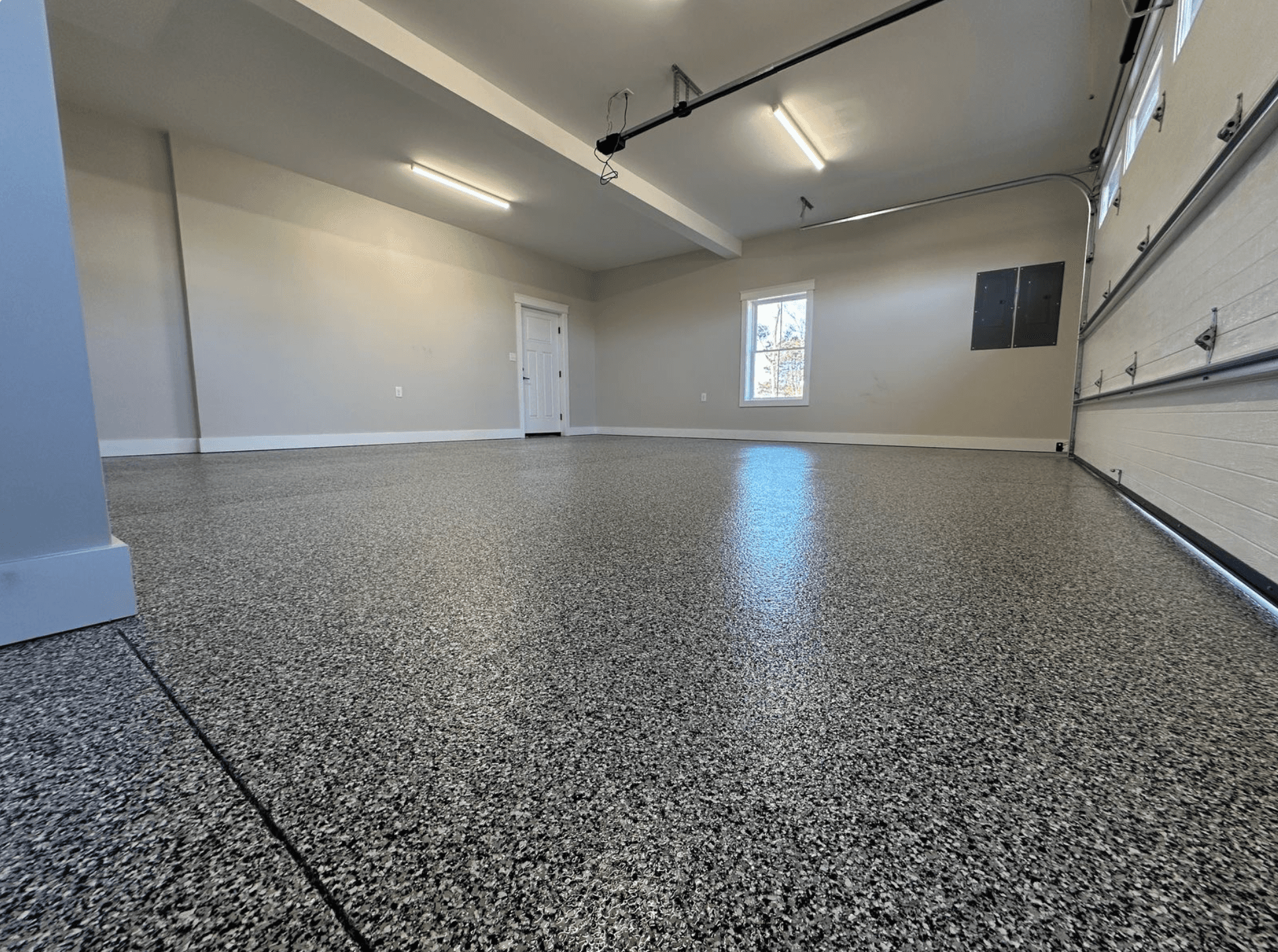
Urethane Cement Flooring
Heat & Chemical-Resistant Urethane Cement Flooring in Tampa Bay, FL
Get a Free Urethane Cement Flooring Estimate
Fill out the form — we'll reply within 24 hours.
What Is Urethane Cement Flooring?
Urethane cement is a heavy-duty, seamless flooring system that combines urethane resin with cement to create a surface that's dramatically more heat-resistant, chemical-resistant, and durable than standard epoxy. It's the go-to specification for commercial kitchens, food processing plants, breweries, and industrial facilities where extreme conditions would destroy standard coatings.
The chemistry is unique: urethane cement can withstand thermal shock — rapid temperature changes from freezing to boiling — without cracking or delaminating. It resists acids, caustics, solvents, and hot cooking oils that would etch or soften epoxy within hours. And it's applied at thicknesses of 1/8" to 1/4", creating a monolithic surface that bonds permanently to the concrete substrate.
While urethane cement is primarily specified for commercial and industrial applications, it's increasingly chosen by Tampa Bay homeowners for outdoor kitchens, workshop floors, and garages where heat, chemicals, or heavy equipment are present.
Key Benefits of Urethane Cement Flooring
Extreme Heat Resistance
Withstands thermal shock from -20°F to 250°F continuously, and up to 300°F for short periods. Hot pans, boiling water, and steam cleaning won't damage it.
Superior Chemical Resistance
Resists acids, caustics, solvents, oils, grease, and food acids (citrus, vinegar, dairy) that would destroy standard epoxy or polyaspartic coatings.
Extreme Durability
Urethane cement is significantly harder and more impact-resistant than epoxy. It withstands heavy equipment, pallet jacks, dropped tools, and constant traffic.
Thermal Shock Resistant
The cementitious matrix handles rapid temperature swings without cracking — critical for commercial kitchens where hot fryers sit next to walk-in freezers.
Slip-Resistant Options Available
Urethane cement can be finished with slip-resistant texture meeting OSHA and ADA requirements — ideal for wet commercial kitchen environments.
USDA & FDA Compliant
Meets food safety requirements for commercial food preparation and processing facilities. Non-porous, seamless, and easy to sanitize.
Ideal Applications for Urethane Cement
- Commercial kitchens and restaurant cooking lines
- Food processing and packaging facilities
- Breweries, wineries, and beverage production
- Chemical processing and storage areas
- Pharmaceutical manufacturing facilities
- Aircraft hangars and maintenance bays
- Automotive service bays and repair shops
- Warehouse aisles with heavy forklift traffic
- Outdoor kitchens and grill areas
- Industrial manufacturing floors
Urethane Cement vs. Epoxy: Key Differences
Temperature Resistance: Urethane cement handles 250°F+ continuously. Epoxy softens above 120°F and fails under hot water or steam cleaning.
Chemical Resistance: Urethane cement resists acids and caustics. Epoxy is damaged by many common industrial chemicals and food acids.
Impact Resistance: Urethane cement is significantly harder with better impact resistance. Epoxy can chip and crack under heavy impacts.
Application Thickness: Urethane cement is applied at 1/8"–1/4". Epoxy is typically applied at 10–20 mils (1/64"–1/32").
Cost: Urethane cement typically costs $8–$15 per sq. ft. Epoxy costs $4–$10 per sq. ft.
Best For: Urethane cement for extreme conditions. Epoxy for standard garages, showrooms, and light commercial.
Our Urethane Cement Installation Process
1. Surface Preparation: The concrete is diamond-ground to create the proper surface profile. HEPA dust extraction ensures a clean work environment.
2. Primer Application: A specialized urethane primer penetrates and seals the concrete, ensuring proper bond of the urethane cement system.
3. Urethane Cement Base Coat: The urethane cement is mixed on-site and applied at the specified thickness (typically 1/8"–1/4"). The material is trowel-applied for a smooth, monolithic surface.
4. Aggregate Broadcast (Optional): For slip-resistant finishes, silica sand or aluminum oxide is broadcast into the wet urethane cement.
5. Topcoat (Optional): A clear urethane topcoat can be applied for enhanced chemical resistance and gloss.
6. Curing: Urethane cement cures through a chemical reaction — typically return to service in 24–48 hours depending on temperature and humidity.
Frequently Asked Questions
How much does urethane cement flooring cost in Tampa Bay? Urethane cement typically ranges from $8–$15 per sq. ft. installed, depending on thickness, slip-resistance requirements, and the condition of the concrete. We provide free on-site evaluations and firm pricing.
Is urethane cement suitable for residential garages? For most residential garages, epoxy or polyaspartic is more cost-effective. But if you use your garage as a workshop, park heavy equipment, or need extreme heat/chemical resistance, urethane cement is an excellent choice.
How long does urethane cement flooring last? With proper installation, urethane cement floors typically last 15–20 years in commercial applications. The material does not peel, delaminate, or soften under heat like standard coatings.
Can urethane cement be repaired if damaged? Yes — localized damage can be patched with fresh urethane cement. The repair bonds chemically to the existing material and is virtually invisible.
Our Work
See examples of our urethane cement flooring projects
Other Services
Explore our full range of concrete coating solutions
Urethane Cement Flooring FAQs
Common questions about our urethane cement flooring service
Urethane cement is a trowel-applied, thick-build system containing cement aggregate — it's much thicker, harder, and more heat-resistant than liquid urethane coatings. Standard urethane coatings are thin-film sealers that don't offer the same thermal or chemical protection.
Ready to Get Started?
Contact us today for a free consultation and quote for your urethane cement flooring project