Florida Climate & Garage Floors
How to Stop "Hot Tire Pickup" from Ruining Your Garage Floor
Are your car tires ripping the epoxy off your Tampa garage floor? Discover the science behind "hot tire pickup" in Florida and learn how to permanently stop it.
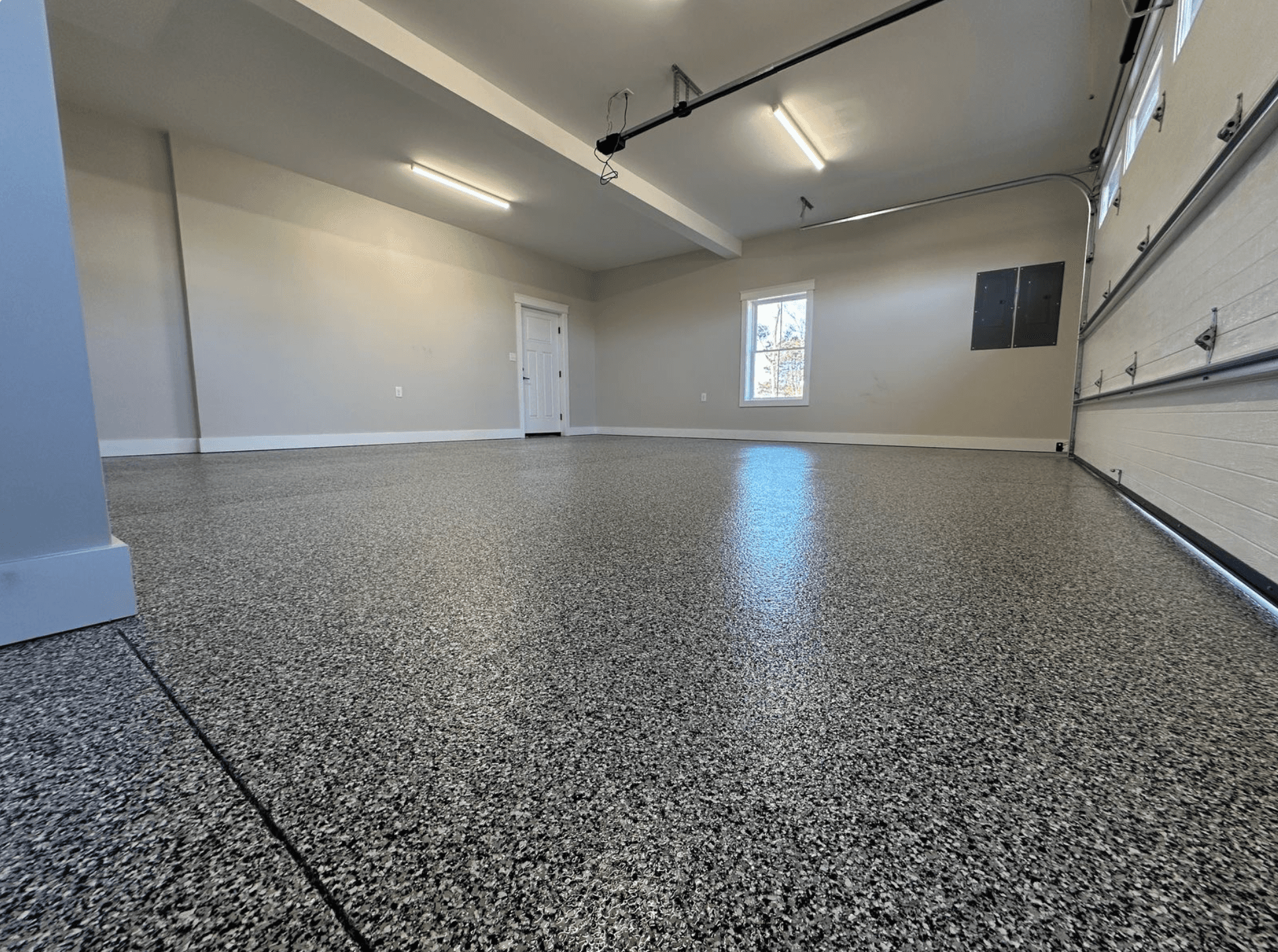
It is the ultimate garage makeover heartbreak. You spend your weekend scrubbing, etching, and rolling a fresh coat of DIY epoxy onto your garage floor. It looks like a pristine car showroom. But a few weeks later, you back your car out of the driveway and notice four bare, ugly patches of concrete exactly where your tires were resting.
The epoxy didn't just wear away — it was violently ripped right off the slab.
If you live in the Sunshine State, you have just become a victim of a phenomenon known in the flooring industry as "hot tire pickup." It is the number one killer of DIY garage floors in Florida, and understanding why it happens is the only way to stop it.
The Science: 130°F Roads and Sticky Rubber
To understand hot tire pickup, you have to look at the brutal conditions of a Tampa summer.
During the peak of a Florida afternoon, dark asphalt roads absorb an immense amount of solar radiation. Surface temperatures on the pavement can easily exceed 130°F (54°C). As you drive home, your car tires are rolling across this scorching surface, absorbing that heat. The friction from driving heats the rubber even further, causing the tires to physically expand and become slightly sticky.
When you pull into your garage and park, those hot, expanded tires press down with thousands of pounds of weight directly onto your freshly painted epoxy.
Here is where the disaster happens: As the garage cools down overnight, your tires cool down, too. When rubber cools, it contracts. As the tire tread shrinks, it grabs onto the epoxy coating like a giant, heavy-duty suction cup. When you put your car in reverse the next morning, the rotational force of the tire combined with that suction rips the weak epoxy coating right off the concrete.
Why Cheap Epoxy is the Perfect Victim
Hot tire pickup rarely happens to professional, commercial-grade floors. It is almost exclusively a problem with big-box store DIY epoxy kits. There are two main reasons for this:
Because the bond between the tire and the epoxy is stronger than the bond between the epoxy and the acid-etched concrete, the concrete loses every time.
- Poor Surface Prep: DIY kits usually tell you to prep the floor with a chemical "acid etch." This only cleans the very top microscopic layer of the concrete. It does not open the pores of the slab. Therefore, the epoxy just sits on top like a giant sticker.
- Weak Chemistry: Water-based DIY epoxies dry into a rigid, brittle layer. They do not have the flexibility to handle the thermal expansion and contraction of a 4,000-pound vehicle's tires.
How to Stop Hot Tire Pickup Permanently
If you want a garage floor that actually survives the Florida heat, you have to upgrade your approach. Here are the three best ways to defeat hot tire pickup:
1. Upgrade to a Polyaspartic Coating
If you want a coated floor, skip the water-based epoxy entirely. Professional installers use polyaspartic (a type of polyurea) for Florida garages. First, they use heavy diamond grinders to mechanically cut into the concrete, opening the pores. The polyaspartic liquid seeps deep into those pores before hardening, creating a permanent mechanical root system inside the slab. Furthermore, polyaspartic cures with a slight elasticity, allowing it to flex under the pressure of contracting tires without breaking its bond.
2. Install Interlocking Garage Tiles
If you still want a DIY project, take liquids out of the equation. Hard plastic or rubber interlocking tiles (like Swisstrax or RaceDeck) snap together to create a floating floor over your concrete. The hot tires rest on the heavy-duty plastic, which is entirely immune to the suction and thermal contraction that destroys epoxy.
3. Use Heavy-Duty Parking Mats
If you already have a painted floor and want a cheap band-aid solution, you can buy thick rubber parking mats. You place these exactly where your tires rest. The hot tire bonds to the mat instead of the floor. While not the prettiest solution, it will save your current paint job.
Hot Tire Pickup Quick Defense Grid
- The Cause: 130°F+ asphalt heats tires, which cool and contract on the garage floor
- The Primary Victim: DIY water-based epoxy kits applied over acid-etched concrete
- Solution 1: Polyaspartic Coatings (Deep mechanical bond, high heat tolerance)
- Solution 2: Interlocking Garage Tiles (Physical barrier immune to tire suction)
- Solution 3: Rubber Parking Mats (Budget-friendly band-aid for existing floors)
Beat the Heat
Tampa's heat is relentless, and your garage floor needs to be built to handle it. By understanding hot tire pickup, you can skip the cheap epoxy kits and invest in a floor that will actually look great for years to come.
Ready to build a floor that can handle Florida heat? Call (727) 743-7242 or contact us online for a free estimate.
Verifiable Sources & Further Reading
- Garage Floor LLC — What is Hot Tire Pickup and How Do I Prevent It?
- Florida Garage Door Pros — Why Garage Floor Epoxy Peels in Florida
- All-Star Concrete Coatings — How to Prevent Hot Tire Pickup on Your Garage Floor
- ArmorPoxy — Epoxy Garage Floor Coating vs. Hot Tire Pickup
Garrett Allen
Owner & Lead InstallerGarrett Allen is the owner and lead installer at Tampa Bay Concrete Coatings. With over 20 years of hands-on experience, he has installed thousands of epoxy, polyaspartic, metallic resin, and polished concrete floors across Tampa, St. Petersburg, Clearwater, and the surrounding Tampa Bay communities.
- 20+ years in concrete coatings and surface preparation
- Specialist in Florida climate challenges: moisture vapor, UV exposure, and hot-tire pickup
- Diamond grinding, moisture testing, and premium system installation
- 15-year written warranty on professional installations
Ready to discuss your project?
Get practical recommendations and a free estimate from Tampa Bay Concrete Coatings.
You May Also Like
Florida Climate & Garage Floors
Why Standard Epoxy Fails in Florida Garages (And How Polyaspartic Solves Hot Tire Pickup)
Cost & Buying Guides
DIY Epoxy Kits vs. Professional Diamond Grinding: Is Saving $1,000 Worth It?
Florida Climate & Garage Floors
The Tampa Homeowner's Guide to Humidity-Proof Garage Floors
Cost & Buying Guides
How Much Does Epoxy Flooring Cost in Tampa Bay? (2026 Price Breakdown)
Florida Climate & Garage Floors