Florida Climate & Garage Floors
The Tampa Homeowner's Guide to Humidity-Proof Garage Floors
If you live in a humid climate like Tampa, moisture vapor transmission will destroy standard DIY epoxy. Discover the best garage floor coatings for high humidity, from polyaspartic to polished concrete, plus pricing.
If you live in West Central Florida, you already know that humidity dictates almost every aspect of home maintenance. But while you might be focused on your HVAC system or roof, that thick, muggy air is also waging a silent war beneath your tires.
Many Tampa homeowners spend a weekend meticulously applying a big-box store DIY epoxy kit to their garage floor, only to watch it bubble, blister, and peel up in massive chunks just a few months later.
The culprit isn't necessarily bad application — it's bad chemistry meeting bad weather. To find the best garage floor coating for high humidity, you first have to understand the invisible force destroying your floors: Moisture Vapor Transmission.
The Problem: Moisture Vapor Transmission (MVT)
Florida sits at sea level with an incredibly high water table. Because concrete is porous like a giant, heavy sponge, it naturally absorbs the moisture from the ground below.
When the air in your garage heats up, it creates a pressure difference. This hydrostatic pressure forces the trapped moisture up through the concrete slab to evaporate into the air — a process known as Moisture Vapor Transmission (MVT), often referred to as "sweating concrete."
When you roll a cheap DIY epoxy over a sweating slab, you are essentially putting a plastic lid on a boiling pot. The moisture vapor pushes upward with incredible hydraulic force. Because most DIY kits only require you to "acid etch" the floor rather than mechanically grind it, the epoxy bond is weak. The vapor pressure easily breaks that bond, causing the coating to delaminate and peel off, often sticking to your hot car tires.
Comparing Garage Flooring Types for Humid Climates
To beat MVT, you need a flooring solution that either mitigates the moisture, breathes through it, or completely ignores it. Here is how the most popular garage flooring types hold up in Florida's climate, along with their estimated professional installation costs for 2026.
1. Polyaspartic / Polyurea Coatings (The Best Overall)
Polyaspartic coatings have largely replaced traditional epoxy for professional installations in humid climates. When paired with a proper moisture-mitigating primer base coat, these systems form a permanent, chemical bond with the concrete.
Professionals use heavy diamond grinders to open the pores of the concrete, allowing the liquid to seep deep into the slab before curing. This mechanical bond is strong enough to withstand heavy hydrostatic pressure.
- Pros: Highly durable, UV-stable (won't turn yellow), rapid 1-day installation, resists hot tire peeling.
- Cons: Not a DIY project; requires professional grinding equipment.
- Estimated Pricing: $6.00 – $10.00 per square foot.
2. Traditional & Metallic Epoxy (High Risk)
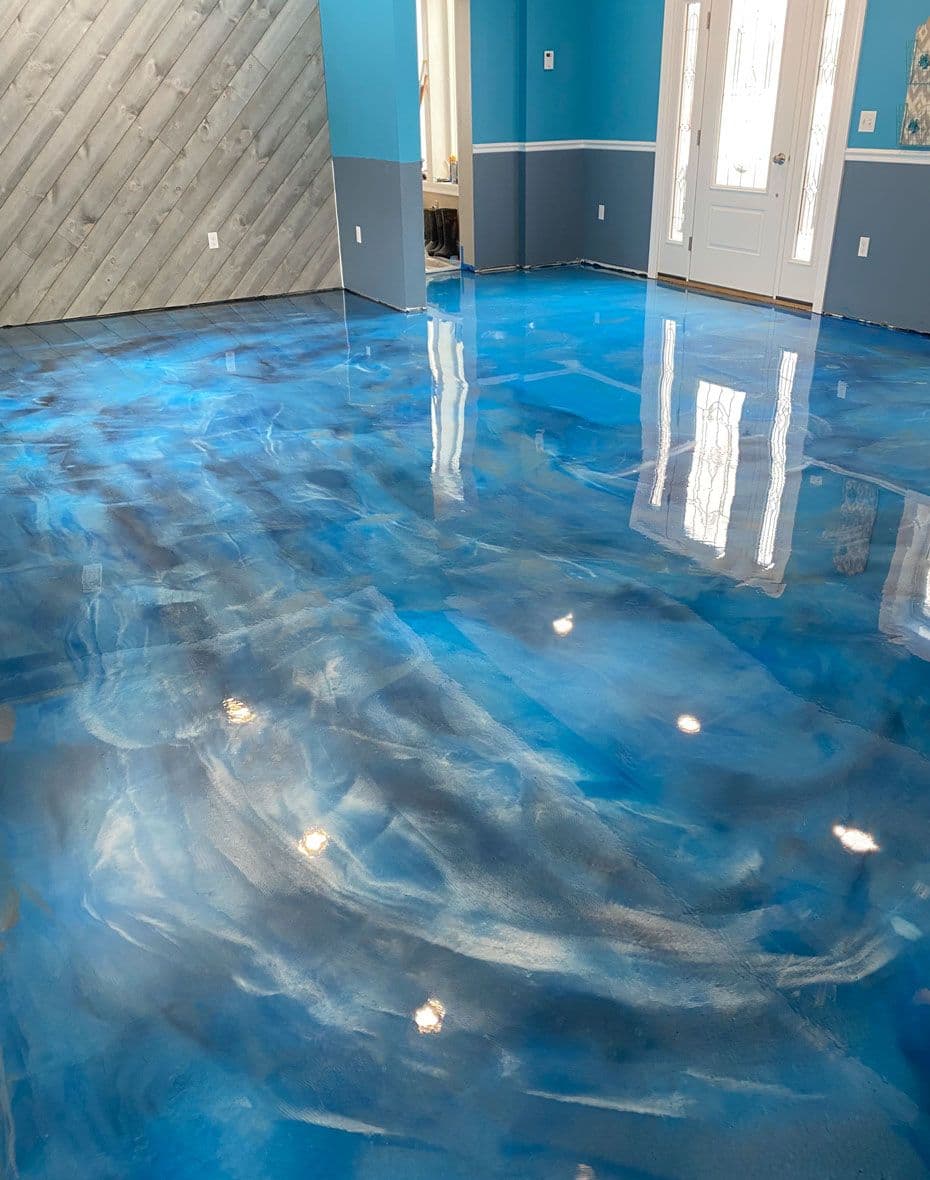
Standard commercial epoxy is still a strong coating, but it requires a very specific moisture barrier to survive in Tampa. Metallic epoxy — which mixes metallic pigments into the resin for a stunning, three-dimensional marble effect — is incredibly popular for high-end "show garages." However, because it is thick and impermeable, it is highly susceptible to MVT failure if the concrete is not perfectly prepped and sealed against moisture first.
- Pros: Lower material cost (standard); gorgeous aesthetic (metallic).
- Cons: Very susceptible to peeling from MVT without proper base layers; long cure times.
- Estimated Pricing: $4.00 – $8.00/sq ft (Standard) | $8.00 – $14.00/sq ft (Metallic).
3. Polished Concrete (The Breathable Option)
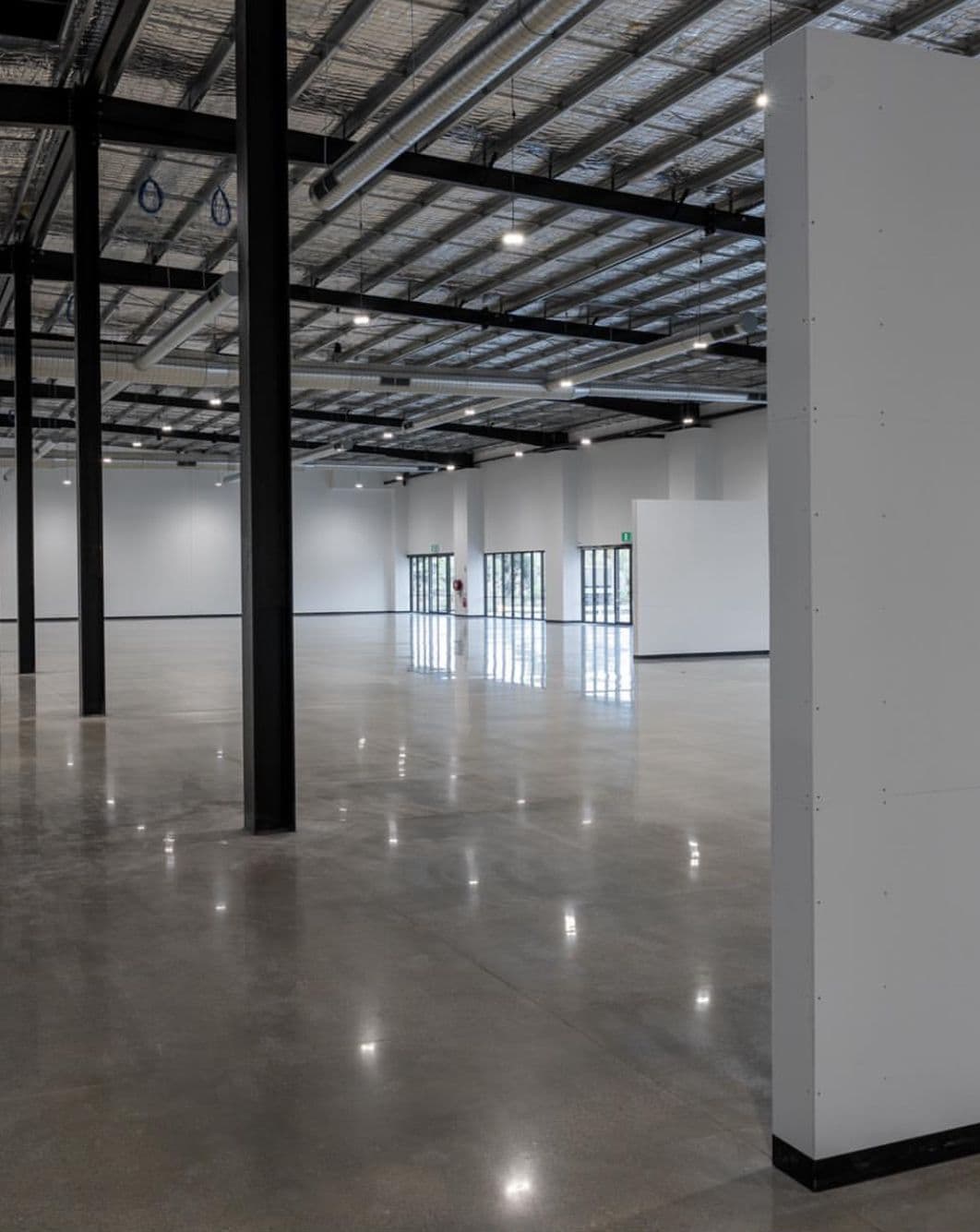
If you want to completely eliminate the risk of peeling, don't coat the floor at all. Professional concrete polishing involves grinding the slab down to a smooth, glossy finish and applying a penetrating densifier. Because there is no topical layer, moisture vapor passes right through it harmlessly.
- Pros: Impossible to peel or blister; extremely long lifespan; excellent for high humidity.
- Cons: Susceptible to oil and chemical stains; lacks the vibrant colors of coated floors.
- Estimated Pricing: $3.00 – $7.00 per square foot.
4. Interlocking Modular Tiles (The DIY Bypass)
If you want a DIY project but don't want to fight MVT, interlocking garage tiles (made of hard plastics, rubber, or metal) are the perfect solution. Brands like Swisstrax or RaceDeck feature ribbed, vented designs. This allows the concrete to "breathe" and moisture to evaporate safely underneath the tiles without causing any damage.
- Pros: 100% DIY friendly; totally immune to MVT; easy to replace single damaged tiles.
- Cons: Liquids and dirt can fall between the grates, requiring occasional pressure washing beneath them.
- Estimated Pricing: $3.00 – $6.00 per square foot (materials only).
Tampa Garage Flooring: 2026 Cost & Humidity Resistance
Here is how the options stack up for humidity resistance and cost per square foot:
- Polyaspartic System — MVT Resistance: Excellent* | 2026 Price: $6.00 – $10.00
- Polished Concrete — MVT Resistance: Perfect | 2026 Price: $3.00 – $7.00
- Interlocking Tiles — MVT Resistance: Perfect | 2026 Price: $3.00 – $6.00 (DIY)
- Standard Epoxy — MVT Resistance: Poor to Fair* | 2026 Price: $4.00 – $8.00
- Metallic Epoxy — MVT Resistance: Poor to Fair* | 2026 Price: $8.00 – $14.00
- *Requires professional diamond grinding and a moisture-mitigating primer.
The Verdict
If you live in a high-humidity area, avoid water-based DIY epoxy kits at all costs. For a coated floor, hire a professional to grind the slab and install a polyaspartic system with a moisture vapor barrier. If you want to tackle the garage yourself, skip the liquids entirely and opt for vented interlocking tiles to let your concrete breathe.
Ready to solve your humidity issues for good? Call (727) 743-7242 or contact us online for a free estimate.
Verifiable Sources & Further Reading
- Florida Garage Door Pros — Why Garage Floor Epoxy Peels in Florida
- All-Star Concrete Coatings — Understanding Moisture Vapor Transmission in Garage Floors
- Garage Floor LLC — Polished Concrete vs Epoxy: Which is Best for Your Garage?
- Swisstrax — The Benefits of Vented Garage Floor Tiles in Humid Climates
Garrett Allen
Owner & Lead InstallerGarrett Allen is the owner and lead installer at Tampa Bay Concrete Coatings. With over 20 years of hands-on experience, he has installed thousands of epoxy, polyaspartic, metallic resin, and polished concrete floors across Tampa, St. Petersburg, Clearwater, and the surrounding Tampa Bay communities.
- 20+ years in concrete coatings and surface preparation
- Specialist in Florida climate challenges: moisture vapor, UV exposure, and hot-tire pickup
- Diamond grinding, moisture testing, and premium system installation
- 15-year written warranty on professional installations
Ready to discuss your project?
Get practical recommendations and a free estimate from Tampa Bay Concrete Coatings.
You May Also Like
Florida Climate & Moisture Testing
Coastal Humidity vs. Garage Floor Coatings: What Tampa Bay Homeowners Need to Know
Florida Climate & Garage Floors
Why Your Epoxy Garage Floor is Yellowing (And the UV-Proof Tampa Alternative)
Cost & Buying Guides
How Much Does Epoxy Flooring Cost in Tampa Bay? (2026 Price Breakdown)
Cost & Buying Guides
Epoxy vs. Metallic Resin vs. Polished Concrete: Which Floor Belongs in Your Home?
Cost & Buying Guides